









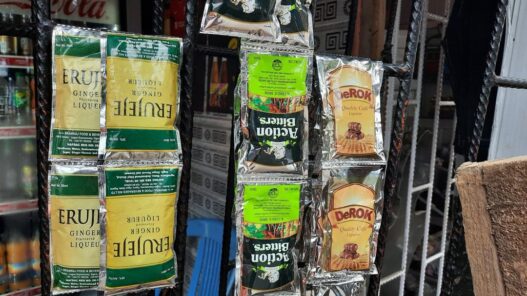
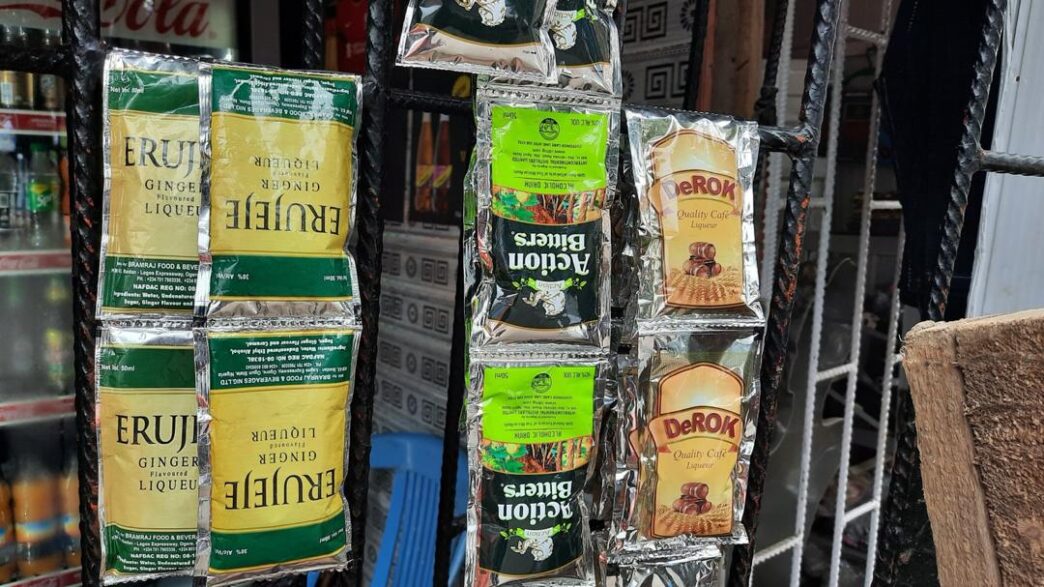
Walk through almost any market in Nigeria today and you’ll notice something interesting: nearly everything now comes in a smaller version.
Sachet milk. Sachet detergent. Sachet tomato paste. Sachet coffee. And, increasingly, sachet alcohol. At first glance, it can seem like clever marketing or simply consumer convenience. But beneath it lies something much deeper about the state of the economy and the way Nigerians are adapting to financial pressure.
This phenomenon has a name: sachetization.
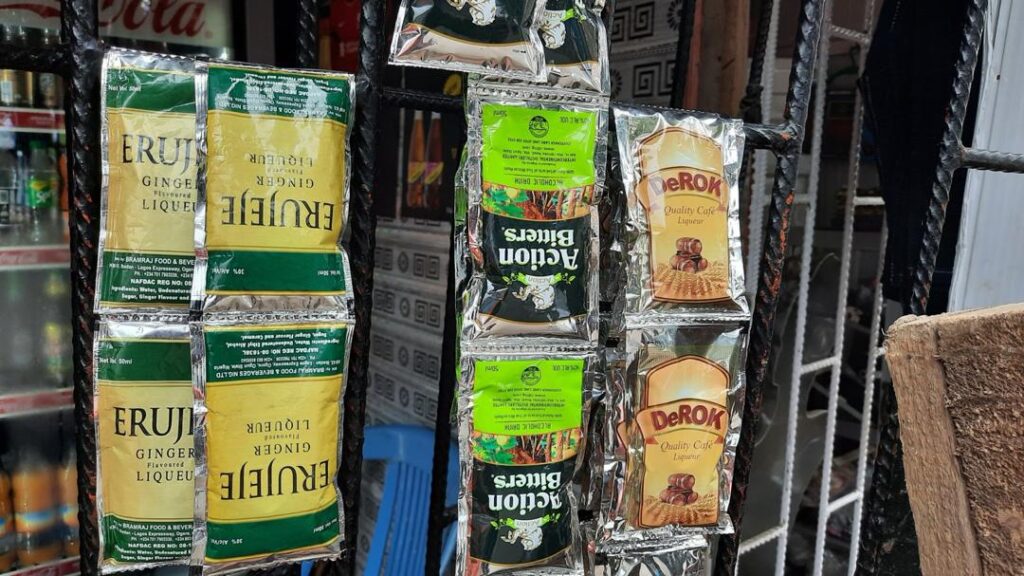
Image Credit: The Nation Newspaper
Sachetization refers to the process by which products are increasingly packaged into smaller, more affordable portions because consumers can no longer consistently afford the full-sized versions.
In many ways, it has become one of the clearest indicators of shrinking purchasing power.
And while small-format products exist globally, the scale at which sachet culture operates in Nigeria — and across parts of Africa — is unique. Sachet alcohol in particular is largely an African phenomenon, born out of the need to make consumption accessible in economies where disposable income remains low. The logic is simple: if consumers cannot afford the bottle, they buy the sip-sized version instead.
But over time, this has evolved beyond affordability. Sachetization has become an entire economic language and it is one that reflects how businesses and consumers negotiate survival in an increasingly expensive country.
In an interview, Patrick Michael, CEO of StarTimes Nigeria, explained the thinking behind adapting products to current economic realities:
“The Nigerian market is diverse, and the potential for profit remains high. However, we can’t overlook the economic instability, which has affected purchasing power. At times like this, it becomes pertinent for industry players like ourselves to cushion the effect of this situation on customers.”
Companies are no longer simply selling products; they are adjusting products to fit declining spending power.
Why Lacoco Fits Into This Conversation
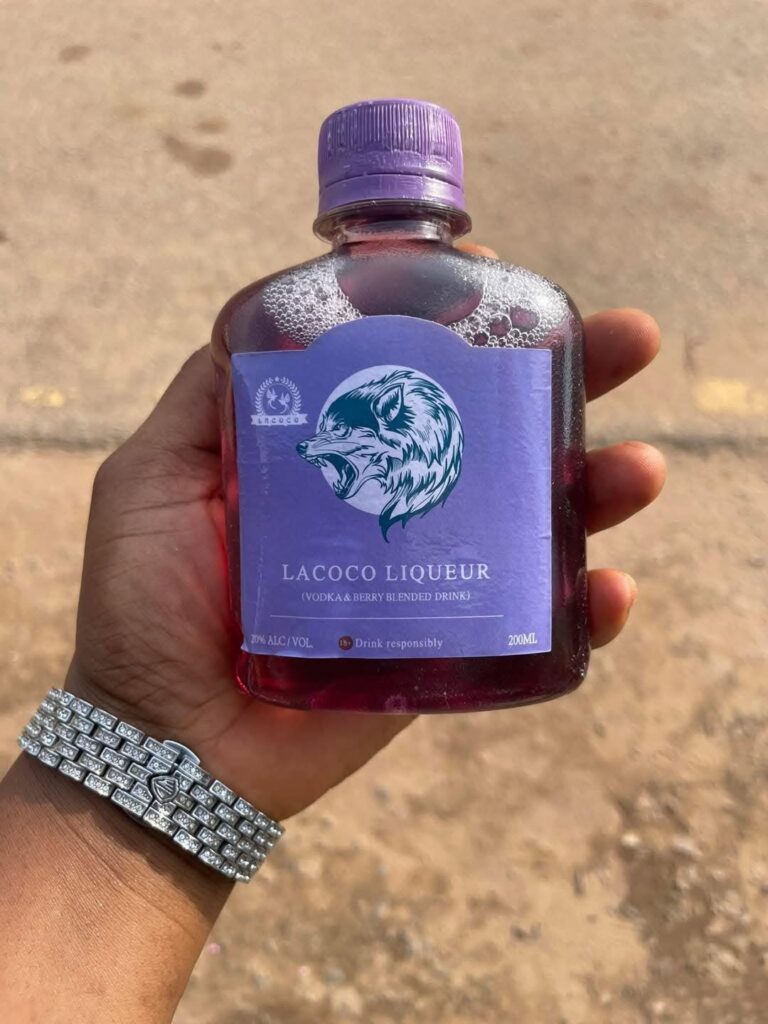
This is where Lacoco becomes relevant.
Technically, Lacoco is not a sachet product. But culturally and economically, it embodies the exact psychology driving sachetization. The appeal is not simply the drink itself. It is what the drink represents: access.
Consumers increasingly cannot afford the “full experience” anymore — not consistently, at least. Instead of opting out entirely, they are choosing smaller, cheaper, and more immediate versions of consumption. Brands that understand this reality are thriving. Lacoco entered the market already designed around this economic condition. It did not need to downsize later because it was already built for consumers navigating constrained spending.
It is affordable. Portable. Social-media-friendly. And perhaps most importantly, it contains just enough alcohol to “get the job done.”
In a sachet economy, that matters more than prestige packaging.
Its popularity among young Nigerians also challenges a common assumption: that Gen Z consumers are drinking less because they are uninterested in alcohol. The reality may be far more economic than cultural. Young people still want leisure, nightlife, and social consumption. What has changed is their ability to afford traditional pricing. When a standard bottle costs six to ten times more than a smaller alternative, the smaller alternative wins almost every time.
Sachetization, in this sense, prevents consumers from being completely priced out of participation.
Survival, Not Failure
It is important, however, not to frame sachetization itself as inherently negative. In many ways, it is a deeply human adaptation to economic pressure.
Consumers are trying to stretch limited income. Businesses are trying to maintain relevance in a difficult market. Both sides are adjusting in real time to survive inflation, currency instability, and declining purchasing power. The days when bulk buying represented the everyday reality of the average Nigerian consumer are fading. Increasingly, consumption is becoming fragmented into smaller and smaller units designed around immediate affordability rather than long-term value.
That shift says less about individual consumer choices and more about the broader economic environment shaping them. Because eventually, there is a limit to how small things can become.
Recently, the National Agency for Food and Drug Administration and Control (NAFDAC) announced a ban on sachet alcohol products, although enforcement has remained inconsistent amid resistance from small-scale manufacturers and distributors. And perhaps that contradiction perfectly captures modern Nigeria.
Consumers are trying to survive an increasingly expensive reality. Businesses are trying to survive increasingly fragile consumers. And regulators are attempting to control the consequences of both. The result is an economy where survival itself has become miniaturized — sold in portions, priced in fragments, and consumed one sachet at a time.