






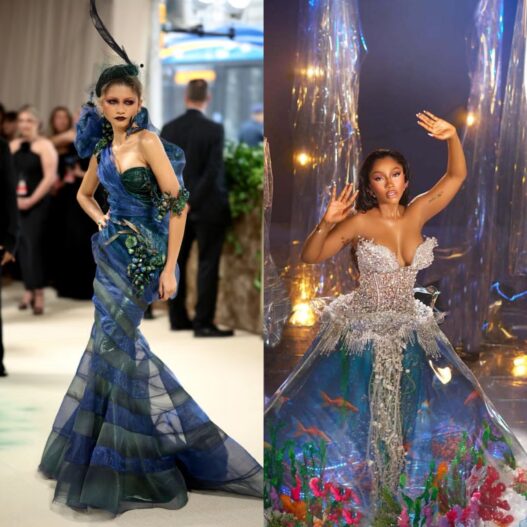
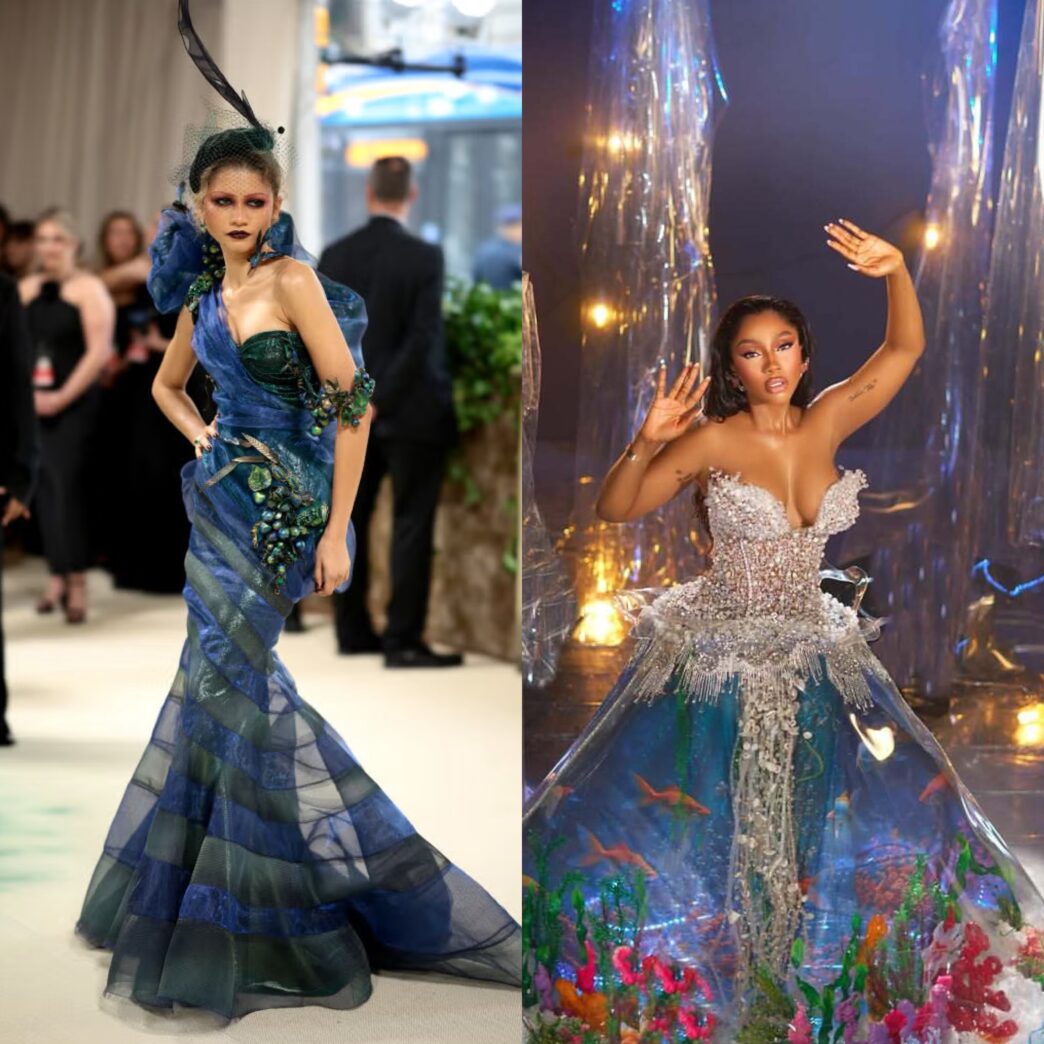
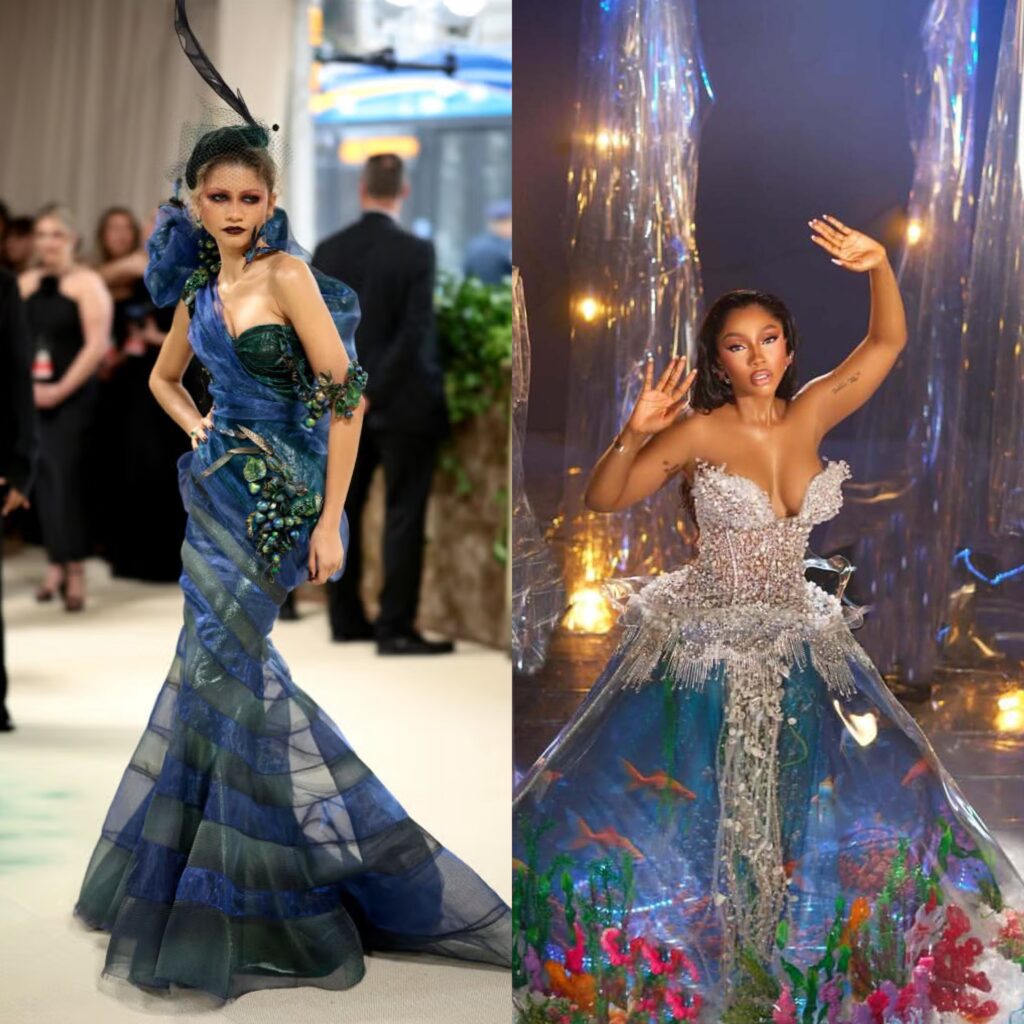
Last weekend, the Africa Magic Viewers’ Choice Awards took place. Shoutout to all the winners and nominees, but one of the most defining things about this year’s AMVCA was the constant MET Gala comparison.
Perhaps it is because these events happen so close to each other — about a week apart — making them easy to compare, but this conversation seemingly happens every year now and the discourse has even left the coast. I’ve seen videos comparing the two from non-Nigerians, and the overall idea is that Nigerian celebrities serve so hard at this event that they should be getting invited to the MET Gala, or that the AMVCA deserves to be titled the African MET Gala. Let’s see how well that holds up.
What’s Similar Between The Two?
They are both fashion-first spectacles. This is frankly the biggest similarity: both events involve celebrities in flashy, expensive clothes. I think this is where most of the similarities end.
The Ecosystem
The Met Gala constantly references fashion history, designers, celebrity lore and past iconic moments. Every year feels connected to a larger cultural archive. There’s a lore, there are expectations, there are parameters that may not make sense or seem obvious at first glance, but ask anyone who has virtually attended the MET Gala for over four years and you’ll be surprised how much feels implied and understood about the event.
The Africa Magic Viewers’ Choice Awards still behaves more like a yearly event than an evolving cultural canon. There are iconic looks, but not enough effort goes into mythologising them afterward.
African Designers Are Not Positioned As The Central Stars
Ironically, one of Africa’s biggest cultural strengths is fashion design, styling and craftsmanship. But AMVCA coverage still tends to focus more on celebrity attendance than the designers creating the looks. The MET Gala understands that designers are celebrities too.
The MET Gala is a star-studded event for sure, but it is also one that is heavily driven by fashion houses. Being invited often requires a fashion house buying a table and inviting you, usually based on current brand partnerships. The fashion ecosystem itself is central to how the event operates.
The AMVCA Still Struggles With Criticism Culture
Part of what makes the MET Gala so dominant is that people aggressively analyse it. Fashion critics, editors, TikTok creators and fans all debate what worked and what failed. That tension creates cultural heat.
The AMVCA ecosystem can sometimes be too polite or too fan-driven, which means fewer strong opinions, less fashion discourse and fewer memorable “conversation” moments. Celebrities still actively jump into personal opinions from viewers because the AMVCA is ultimately more personality-driven than institution-driven.
There Is No “You Had To Be There” Exclusivity
Part of the MET Gala’s power is psychological. It feels elite, inaccessible and culturally important. Even people who complain about it still tune in. The AMVCA is glamorous, but it has not yet mastered that same level of anticipation or spectacle.
We still can barely see inside the MET itself. Ariana Grande and Cynthia Erivo performed at the MET Gala and people could only see clips through hidden-camera recordings. Sabrina Carpenter and Stevie Nicks reportedly performed this year and all we really know is that they sang “Landslide.” We barely even have proper images of what Beyoncé wore inside the MET. That’s exclusivity.
The AMVCA, meanwhile, still has accessibility and inclusion as part of its branding.
The Production Aesthetics Are Inconsistent
Sometimes the photography, lighting, carpet design, interview setups and livestream quality do not fully match the scale of the talent attending. The MET Gala understands that presentation is part of the mythology. Every camera angle is designed to create immortal images.
With the AMVCA, so much of the content feels fragmented. Some celebrities shoot their looks in private studios, others release heavily edited photos hours before the carpet, and the overall visual identity can feel disconnected. Is the event powered by a single fashion institution or by individual celebrity culture?
At the MET Gala, the fact that everyone walks up those same iconic steps equalises even A-list celebrities for a moment and allows audiences to judge the looks against each other in real time. That shared staging is part of what makes the event feel culturally definitive.