







Manchester City’s legal battle over its alleged financial rule breaches has once again put one of sport’s oldest questions in the spotlight: how far will people go to win?
For decades, the biggest sporting stages have promised money, fame and immortality. But the pursuit of glory has also produced some of sport’s ugliest scandals, from doping and match-fixing to corruption at the very top of the game.
Manchester City’s case is far from the first time a sporting powerhouse has been accused of crossing the line.
Here are four scandals that shook the sporting world.
1. Lance Armstrong’s great lie
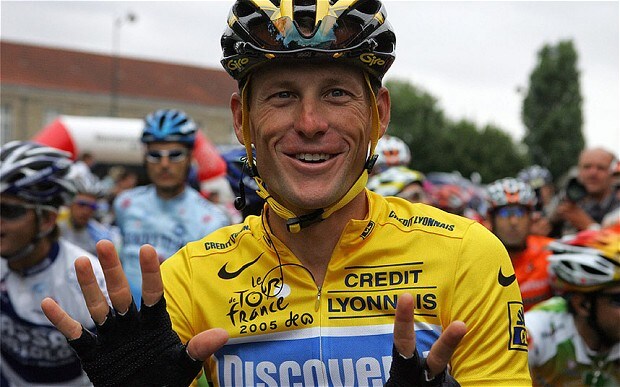
Image Credit: Getty Images
For years, Lance Armstrong insisted that his seven Tour de France victories, won between 1999 and 2005, were achieved without the help of performance-enhancing drugs.
His story was extraordinary.
At 25, Armstrong was diagnosed with testicular cancer that had spread to other parts of his body. Doctors warned that he could die. Instead, he survived, returned to professional cycling and went on to dominate the sport’s biggest race. His comeback turned him into an international hero. His Livestrong Foundation raised millions of dollars for cancer support, helped by the now-iconic yellow wristbands worn around the world.
But behind the story was a doping programme that would eventually unravel.
As allegations from former teammates mounted and investigators gathered evidence, Armstrong’s version of events became increasingly difficult to defend. In 2012, the United States Anti-Doping Agency stripped him of his seven Tour de France titles and handed him a lifetime ban from sanctioned competition.
A year later, Armstrong finally admitted what he had spent years denying, confessing to using performance-enhancing drugs in a televised interview with Oprah Winfrey.
Cancer survivor. Cycling champion. American hero. Cheat.
The Armstrong scandal remains one of sport’s most spectacular falls from grace.
2. South Africa’s golden boy and the price of money
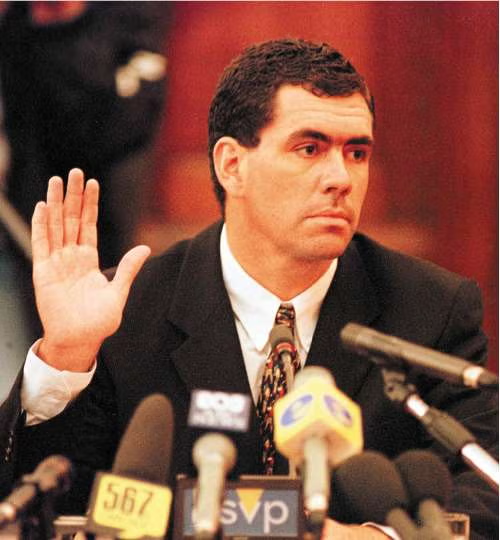
Hansie Cronje was once the golden boy of South African cricket.
Good-looking, charismatic and widely respected, Cronje captained the national team during a period when South African cricket was rebuilding its identity on the international stage. Even Nelson Mandela praised him, highlighting the “excellent manner” in which he led the Proteas.
Then money changed everything.
The rapid growth of international cricket betting created new opportunities for bookmakers and organised crime. Cronje became entangled in that world, accepting payments and discussing match-fixing with bookmakers.
One of the most infamous incidents came during South Africa’s Test against England in 2000.
With rain threatening to produce a draw, Cronje approached England captain Nasser Hussain with an unusual proposal: both teams would forfeit an innings, creating a sudden run chase and giving England a chance to win.
It looked like a sporting gesture designed to produce a more exciting finish.
It was anything but.
Cronje had reportedly accepted £5,000 to ensure the match did not end in a draw.
His downfall came when an Indian police investigation into bookmakers intercepted conversations between Cronje and a bookmaker. He eventually confessed to accepting money and attempting to influence matches.
Cronje was banned from cricket for life.
Two years later, at just 32, he died in a plane crash.
The man who had once represented the best of South African cricket had become one of the most infamous figures in the sport.
3. The secret urine swap at Sochi
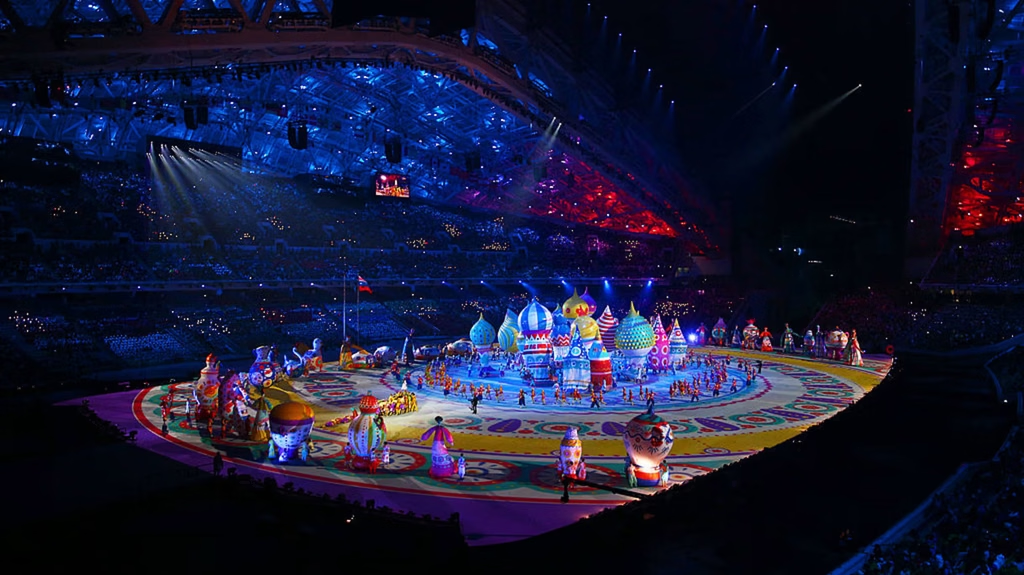
The 2014 Winter Olympics in Sochi were designed to showcase a powerful, modern Russia.
The Games reportedly cost around $50 billion, making them one of the most expensive sporting events ever staged. But behind the spectacular venues and elaborate opening ceremony was a doping operation that would eventually become one of the most extraordinary scandals in Olympic history.
According to investigations by the World Anti-Doping Agency, Russian officials developed a sophisticated system to manipulate athletes’ drug-testing samples.
At the centre of it was a secret operation inside the doping-control laboratory.
Russian athletes who had used banned substances would provide contaminated urine samples. Those samples were then secretly replaced with clean urine that had been collected and frozen before the athletes began their doping programmes.
The operation reportedly involved Russia’s security services, with a secret opening allowing samples to be passed from the laboratory to an adjoining room, where they could be swapped.
The story sounded almost too elaborate to be true.
But investigations led by WADA and other bodies uncovered evidence of a state-backed doping system operating during the Games.
The scandal ultimately resulted in hundreds of Russian athletes facing bans or sanctions, while Russia’s participation in subsequent Olympic competition was heavily restricted.
What made Sochi so shocking was not simply that athletes had doped. It was the scale of the operation — and the alleged involvement of state institutions in helping them evade detection.
4. The Italian job
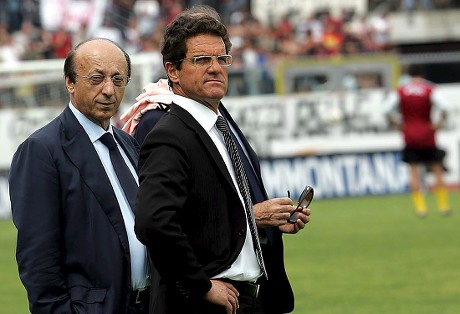
In 2004, Italian prosecutors were investigating suspected doping at Juventus when their investigation uncovered something much bigger.
Telephone conversations involving Juventus general manager Luciano Moggi appeared to reveal an elaborate system for influencing the appointment of referees and, allegedly, gaining favourable treatment for certain clubs.
Moggi denied wrongdoing, but the investigation widened.
Juventus, AC Milan, Fiorentina, Lazio and Reggina were all implicated in the scandal that became known as Calciopoli.
The consequences were enormous.
Juventus were stripped of their 2004–05 and 2005–06 Serie A titles and relegated to Serie B. Other clubs received points deductions and other punishments.
The scandal also broke up one of the most formidable squads in European football.
Zlatan Ibrahimović and Patrick Vieira left for Inter Milan, while Fabio Cannavaro and Emerson moved to Real Madrid. Lilian Thuram and Gianluca Zambrotta joined Barcelona.
But not everyone abandoned Juventus.
Gianluigi Buffon, Alessandro Del Piero, Giorgio Chiellini, Pavel Nedvěd and David Trezeguet stayed and helped the club navigate its first season in Italy’s second division.
Juventus eventually returned to Serie A and rebuilt itself into a dominant force.
But Calciopoli left a permanent mark on Italian football. It was a reminder that corruption does not always happen in dark corners of sport. Sometimes, it can sit right at the heart of the biggest clubs in the world.
When winning becomes everything
These scandals are different in their details, but they share the same basic problem: the desire to win became more important than the rules designed to make winning meaningful.
Armstrong wanted to remain at the top of cycling. Cronje wanted money. The Russian doping programme sought Olympic glory. Juventus were accused of trying to control the conditions under which their matches were played.
Sport depends on the idea that the competition is fair.
Once that trust disappears, the trophies, records and victories start to mean something very different.